

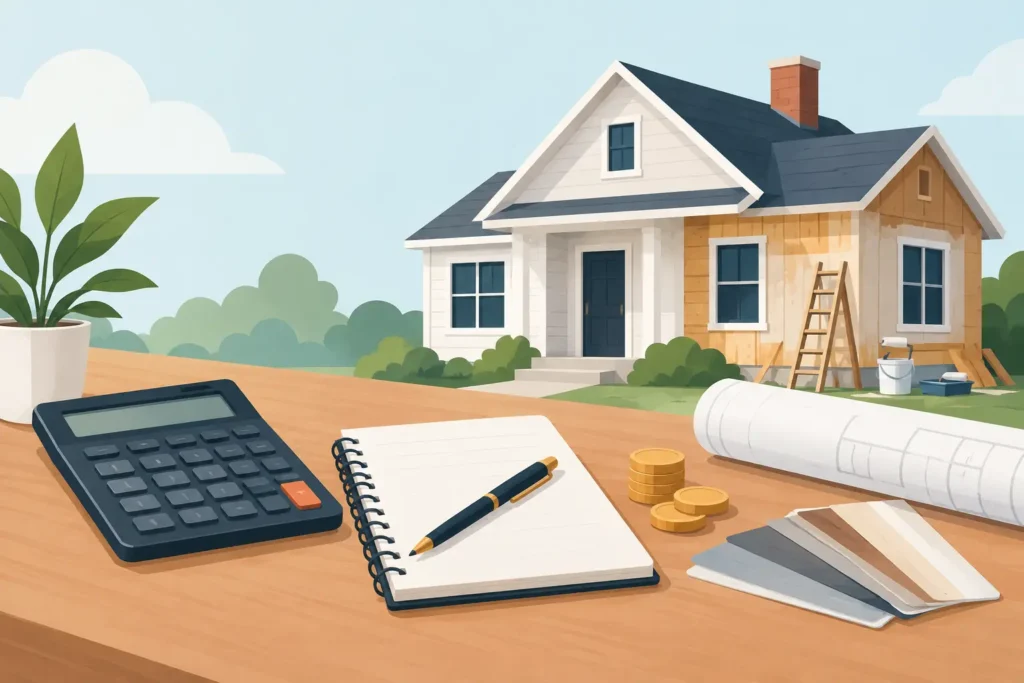
A house can look like a bargain at the purchase price and still become an expensive lesson by closing. The difference is usually in the numbers that were not included: foundation work hidden by fresh paint, weeks of carrying costs, permit delays, or a resale price based on hope instead of nearby sales. Knowing how to prepare a house flip budget means accounting for the full project before making an offer, not trying to make the math work afterward.
For investors in Beaumont and across Southeast Texas, a dependable budget starts with local property knowledge and ends with a clear exit plan. Every house is different, but the process should stay disciplined.
Start With the Resale Value, Not the Purchase Price
Your budget needs a ceiling. That ceiling is the after-repair value, often called ARV: the likely market price once the home is repaired, cleaned, and ready for a buyer. Estimate it using recent sales of similar homes nearby, with similar square footage, bedroom and bathroom count, lot size, condition, and location.
Be careful with the word “similar.” A fully updated home on a quiet street may not support the same price as a basic renovation near a busy road. In older neighborhoods, buyers may also value central air, updated electrical systems, covered parking, or a functional layout more than cosmetic extras. Use sold properties rather than asking prices whenever possible. A list price is a seller’s expectation; a closed sale is stronger evidence.
Once you have a realistic ARV, work backward. Subtract every cost of the project, a profit target that justifies the risk, and a contingency reserve. What remains is the highest purchase price you can consider. If the seller’s number is higher, the deal may not fit – even if the property feels like it has potential.
Build Your House Flip Budget in Separate Buckets
A single repair estimate is not a full flip budget. Separate your costs so a problem in one area does not disappear inside a vague total. This also makes it easier to compare bids and see where the deal has the most risk.
Acquisition and Closing Costs
Start with the purchase price, then add the costs required to take ownership. Depending on the transaction, that can include earnest money, option fees, title expenses, escrow charges, recording fees, inspections, appraisal fees, and lender charges. Cash purchases may reduce financing expenses, but they do not erase closing costs.
Before submitting an offer, ask for an estimate of buyer closing costs based on the expected price and financing structure. This is a small step that prevents a common mistake: treating the contract price as the complete cost of buying the home.
Renovation Costs
The renovation budget should be based on a detailed scope of work, not a round number such as “$30,000 for updates.” Walk the property room by room and outside from curb to backyard. Photograph everything. Measure spaces that need flooring, paint, fencing, siding, roofing, or drywall. Then assign a labor and material cost to each item.
Your scope may include demolition, trash removal, foundation repairs, roof work, plumbing, electrical, HVAC, windows, insulation, drywall, paint, flooring, cabinets, countertops, fixtures, appliances, landscaping, and final cleaning. You may not need all of these categories on every project, but each should be considered.
Get more than one contractor opinion for larger repairs. A low bid can be useful, but only if it covers the same work and uses materials appropriate for the resale price. The cheapest option is not always the best value when a delayed job, poor workmanship, or buyer repair request costs more later.
Holding Costs
Holding costs are the expenses that continue while you own the property. They are easy to overlook because they arrive in smaller monthly amounts, but they can quickly cut into profit when a project runs long.
Include loan interest, property taxes, insurance, utilities, lawn care, pest control, security, HOA fees if applicable, and routine maintenance. If the home will be vacant, make sure insurance coverage is appropriate for a vacant or renovated property. A standard homeowner policy may not cover the risk you assume during a flip.
Estimate holding costs by month, then multiply by a realistic project timeline. If you believe the flip will take four months, run the numbers for six or seven. That extra time gives you room for weather delays, material backorders, contractor scheduling, inspections, listing preparation, and negotiations after an offer arrives.
Sale Costs
Selling the property costs money, too. Budget for real estate commissions or marketing expenses, seller closing costs, title-related fees, concessions, repair requests, staging or photography, and any credits negotiated with the buyer. If the home sits longer than expected, add more holding costs before it sells.
This is where an optimistic resale estimate can create trouble. A project may look profitable before sales costs, then become marginal once those expenses are included. Build your budget using a conservative selling price and a realistic amount for buyer negotiations.
Contingency Reserve
Set aside a contingency reserve before you start. For a straightforward cosmetic renovation with a thorough inspection, 10% of the renovation budget may be a reasonable starting point. For older homes, properties with unknown systems, water damage, structural concerns, or limited inspection access, 15% to 20% may be more responsible.
A reserve is not an invitation to overspend. It is protection for real surprises: damaged subflooring under old carpet, a sewer line issue, outdated wiring, hidden leaks, or a repair required by the city. If you do not use it, that is good news. If you need it, the project is less likely to stall while you search for more funds.
Inspect the Expensive Systems First
Fresh paint and new flooring are visible, but the costly items are often behind walls, above ceilings, or below the ground. Before finalizing your budget, pay close attention to foundation movement, roof condition, drainage, plumbing lines, electrical panels, HVAC age and performance, and signs of moisture or wood damage.
In Southeast Texas, humidity, heavy rain, and drainage conditions can affect both repair needs and buyer confidence. A budget should account for correcting the source of water intrusion, not just covering its appearance. If a home needs major structural, roof, or mechanical work, bring in qualified professionals early. Their findings may change your offer price or tell you to pass on the property.
Set a Timeline That Includes Real-Life Delays
A useful schedule has phases: closing, planning and permits, demolition, rough repairs, inspections, finish work, cleaning, listing, and sale. Assign dates to each phase and identify tasks that must happen before others can begin. For example, electrical and plumbing work should be completed before drywall and paint, while flooring usually comes after major interior work is finished.
Do not schedule based only on the ideal case. Contractors may be booked, material deliveries can shift, and municipal inspections may take longer than expected. A realistic timeline helps you forecast holding costs and communicate clearly with everyone involved.
It also helps protect resale timing. If your target buyer pool is strongest during a particular season, starting a project without enough time to finish may create unnecessary pressure to accept a lower offer.
Use Simple Numbers to Test the Deal
A practical house flip budget can be reviewed with one straightforward equation:
Maximum purchase price = conservative ARV – renovation costs – acquisition costs – holding costs – sale costs – contingency – desired profit.
For example, if a property could reasonably sell for $220,000 after repairs, and your total renovation, ownership, selling, reserve, and profit requirements equal $75,000, your maximum purchase price is about $145,000. If the home needs another $12,000 in work after inspection, your maximum price drops to $133,000.
The exact profit target depends on your financing, experience, project size, and risk tolerance. A small cosmetic flip may justify a different margin than an older property requiring structural repairs. What matters is deciding on the target before emotion enters the negotiation.
Review the Budget Before You Commit
Before signing a contract or releasing earnest money, review the budget with a skeptical eye. Ask whether the ARV is supported by actual comparable sales, whether every repair has a written scope, whether holding costs cover delays, and whether your reserve is large enough for the property’s condition.
It can also help to share the numbers with a trusted local agent, contractor, lender, or experienced investor. A second set of eyes may notice a missing cost or an unrealistic assumption. Broussard Properties TX believes strong local relationships are part of making better property decisions, especially when a project affects both your capital and the neighborhood.
A well-prepared flip budget will not remove every surprise. It will give you a clear point at which to negotiate, walk away, or move forward with confidence. That discipline is what turns a promising house into a project with a real chance to perform.