

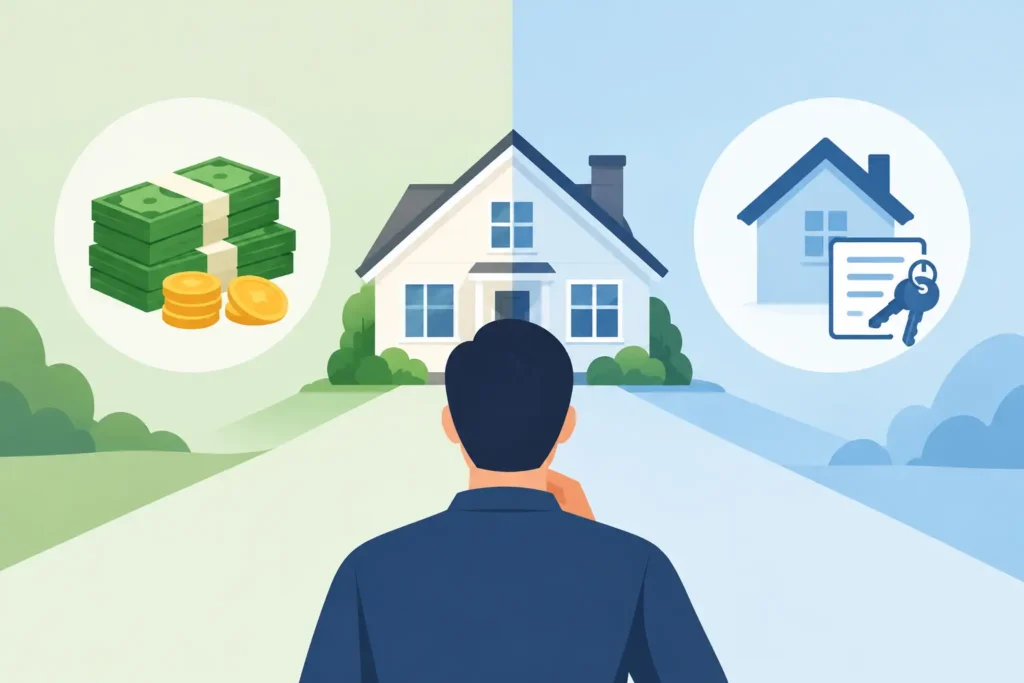
The right home can create urgency. You walk through a house, picture your family in it, and learn that other buyers may be interested. At that point, the cash offer versus mortgage decision is not just about how you pay. It affects your budget, your offer strength, your timeline, and the amount of risk you take on.
For many Southeast Texas buyers, a mortgage is the practical path to homeownership. For others, a cash purchase may offer speed and negotiating room. Neither choice is automatically better. The best option is the one that leaves you comfortable with the home, the monthly cost, and the money you still have available after closing.
Cash Offer Versus Mortgage: The Main Difference
A cash offer means the buyer has enough available funds to purchase the home without borrowing from a lender. There is still paperwork, a title search, closing costs, insurance decisions, and often an inspection. But there is no loan approval, underwriting process, lender-required appraisal, or monthly principal and interest payment.
A mortgage allows you to buy a home by making a down payment and borrowing the rest from a lender. You repay that loan over time, usually with interest. Your monthly housing payment may also include property taxes and homeowners insurance, depending on the loan setup.
The difference can feel simple on paper, but it changes the entire transaction. A financed offer depends on the buyer’s credit, income, assets, appraisal, and final lender approval. A cash offer depends primarily on proof that the buyer can access the funds and complete the purchase.
When a Cash Offer Can Make Sense
Cash is often appealing because it can make an offer cleaner and easier for a seller to evaluate. Without financing to arrange, a cash buyer may be able to close sooner. That can matter when a seller needs to relocate quickly, settle an estate, or avoid a long period of uncertainty.
A cash buyer may also have more flexibility with the property’s condition. Homes that need repairs can be harder to finance, particularly when the issues involve roofing, electrical systems, plumbing, foundation concerns, or safety items. If you are comfortable funding repairs yourself, paying cash can open up opportunities that may not work for a conventional buyer.
There are ongoing cost benefits too. Without a mortgage, you avoid loan interest. Depending on your down payment and loan type, you may also avoid mortgage insurance. Your regular ownership costs still include taxes, insurance, utilities, maintenance, and possible HOA dues, but the absence of a mortgage payment can give a household more monthly breathing room.
Still, paying cash is not a reason to skip due diligence. A fast closing should not mean accepting hidden repair needs, unclear title issues, or an unrealistic price. An inspection and title review remain wise protections, even when no lender requires them.
The risk of tying up too much cash
The biggest cash-offer question is often not whether you can pay for the house. It is whether you should use that much of your available money on one asset.
A home can need repairs soon after closing. In Beaumont and nearby communities, buyers should plan for normal weather exposure, insurance costs, drainage considerations, and the upkeep that comes with owning property. If using cash would leave you with little emergency savings, a lower down payment and a mortgage may offer more financial stability.
Cash buyers should also account for closing expenses, moving costs, initial furnishings, repairs, and a reserve for unexpected issues. Owning your home free and clear can be valuable, but having no financial cushion can create pressure at the wrong time.
When a Mortgage Is the Better Tool
A mortgage lets many buyers purchase a home without waiting years to save the full price. Instead of using all available savings at closing, you can keep money set aside for emergencies, retirement, home improvements, or other priorities.
This approach can be especially practical for first-time buyers and growing families. A well-structured loan allows you to move into a suitable home now while spreading the cost over a predictable term. Fixed-rate mortgages are popular because the principal-and-interest portion of the payment stays the same over the life of the loan, although taxes and insurance can still change.
Financing may also help you buy in a neighborhood or home size that better fits your needs. The goal is not to borrow the maximum amount a lender approves. It is to choose a payment that works alongside your everyday expenses, savings goals, and future plans.
Financing adds steps, but also protections
The mortgage process includes preapproval, document requests, appraisal, underwriting, and final approval. That can feel time-consuming, but it also creates useful checkpoints. The appraisal helps confirm that the home’s value supports the loan amount. Lender requirements may identify issues that deserve a closer look before you commit.
A financed offer commonly includes a financing contingency. This gives the buyer a way to move forward while allowing for the possibility that the loan cannot be approved under the agreed terms. Sellers may prefer fewer contingencies, especially in a competitive situation, but buyers should be cautious about waiving protections they do not fully understand.
A strong preapproval can make a meaningful difference. It shows the seller that a lender has already reviewed key financial information, which can add confidence to a mortgage-backed offer.
Compare the Real Cost, Not Just the Purchase Price
Cash buyers often focus on the price they can pay without interest. Mortgage buyers often focus on the monthly payment. Both numbers matter, but neither tells the full story alone.
With cash, consider the opportunity cost of using your funds for the purchase. Could some of that money be needed for repairs, reserves, business needs, or long-term investments? With a mortgage, look beyond the advertised rate. Ask about closing costs, lender fees, mortgage insurance, total interest over time, property taxes, and homeowners insurance.
For either path, the home itself must make sense. A lower-priced house with major deferred maintenance may cost more than a slightly higher-priced home that has been properly cared for. Request available property information, take your time during the showing, and ask clear questions about the condition and recent improvements.
How Sellers View Each Type of Offer
Sellers generally compare more than the dollar amount. They consider the price, closing date, earnest money, contingencies, inspection terms, and the likelihood that the transaction will close.
A cash offer can stand out because it removes the risk of loan denial. But a financed offer can still be competitive when the buyer is well-prepared, realistic about the home’s value, and flexible on the seller’s preferred timing. A higher financed offer is not always stronger than a lower cash offer, and a cash offer is not automatically the winner if the terms are weak.
This is where local guidance matters. In a market with practical starter homes, rental conversions, and family properties, every listing has its own context. A seller may value a quick close. Another may need extra time to move. A buyer who understands those needs can make a more appealing offer without stretching beyond a sensible budget.
Questions to Ask Before You Decide
Start with your cash reserves. After your down payment or full purchase payment, will you still have enough available for emergencies and homeownership costs? Then look at your monthly comfort level. A mortgage payment should leave room for utilities, transportation, child care, repairs, savings, and the things that matter to your household.
Next, consider the property. Is it move-in ready, or does it need work soon? If repairs are likely, keeping more cash accessible may be more valuable than eliminating a monthly payment. Finally, consider timing. If you need to close quickly and have verified funds, cash may fit well. If preserving liquidity matters more, financing may be the wiser choice.
Broussard Properties TX encourages buyers to focus on the home and payment structure that support their next chapter, not simply the offer type that sounds strongest. Ask questions, review the numbers carefully, and choose a path that lets you enjoy your home with confidence after the keys are in your hand.